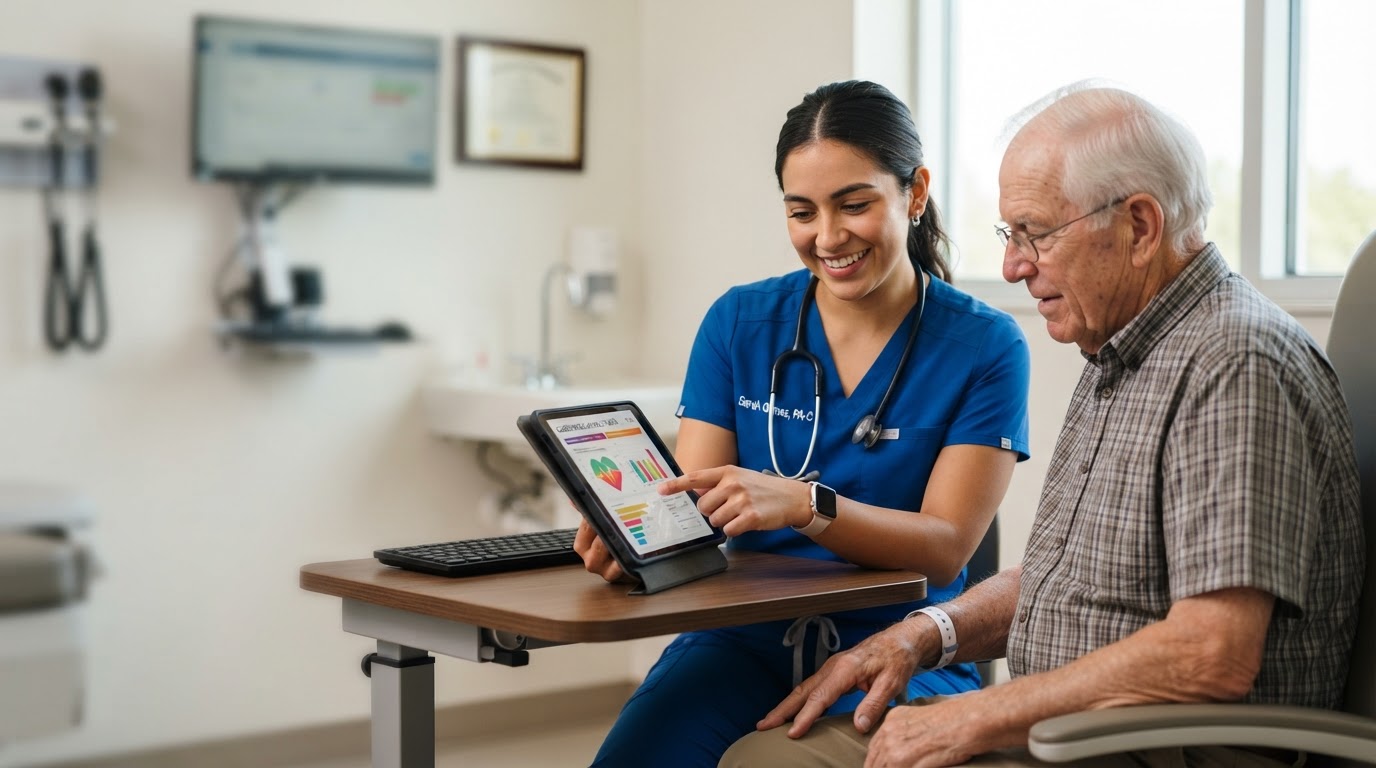


Primary Care
Chronic Condition Care
We provide acute and chronic care, counseling, and patient education at our Morehead City clinic as part of primary care. Please call (252) 222-0204 to discuss your condition and how to prepare medication and record lists for your visit.

Scope & availability
What this visit covers
This category covers acute and chronic care, counseling, and education. It is not emergency care. For a life-threatening emergency, call 911.
What this category means
Chronic condition care means ongoing support for long-term health concerns - assessment, counseling, patient education, and help preparing your medication and record lists so visits are productive.
What it does not promise
This category does not include disease-specific programs, guaranteed refills, remote monitoring, or a patient portal. Any care depends on the clinician's assessment.
In depth
Understanding this concern
Chronic conditions - ongoing health concerns such as high blood pressure, diabetes, and other long-term issues - are a central part of primary care, and managing them well depends on an ongoing relationship with a clinician who knows your history. At our Morehead City clinic, chronic-condition care is part of our primary-care services, and it includes the diagnosis and treatment of acute and chronic illnesses, counseling, patient education, and health maintenance.
Key Clinical Focus
The value of ongoing care for a chronic condition is that it's continuous: a clinician can monitor how you're doing over time, adjust guidance as your situation changes, and help you understand your condition and how to manage it. We do not offer disease-specific programs, guaranteed refills, or remote monitoring, and we cannot promise that a particular treatment or test is covered by your insurance.
What we offer is clinician-guided care that includes counseling and education to help you understand your condition and take an active role in managing it. A key part of preparing for a chronic-condition visit is bringing your medication list - including doses and how often you take each - and any records from previous care, so the clinician has a complete picture.
If you see other specialists, bringing their contact information helps with coordination. To establish care for a chronic condition, please call to confirm scheduling and what to expect for a first visit; we do not publish a new-patient process, so calling is the way to get started.
Chronic-condition care is part of ongoing primary care, not a substitute for urgent care when you're acutely ill - if a new or worsening concern arises, call for a same-day visit.
Good to know
Common concerns
Questions about chronic-condition care are common, and addressing them helps you understand what to expect. A frequent concern is what chronic-condition care includes: it includes the diagnosis and treatment of acute and chronic illnesses, counseling, patient education, and health maintenance, as part of ongoing primary care.
The value is that it's continuous - a clinician can monitor how you're doing over time, adjust guidance as your situation changes, and help you understand your condition and how to manage it. Another common concern is what we do not offer: we do not offer disease-specific programs, guaranteed refills, or remote monitoring, and we cannot promise that a particular treatment or test is covered by your insurance.
What we offer is clinician-guided care that includes counseling and education to help you take an active role in managing your condition. People often ask about refills, and it's worth understanding that we cannot guarantee refills without a visit - medication management is part of ongoing care, and refills are handled in the context of a clinician's assessment, not as a standalone service.
A concern that sometimes arises is how to prepare for a chronic-condition visit, and the most important step is bringing your medication list - including doses and how often you take each - and any records from previous care, so the clinician has a complete picture. If you see other specialists, bringing their contact information helps with coordination.
For people newly diagnosed with a chronic condition, the early visits often focus on understanding the condition and building a foundation for management, and the clinician's counseling and education are central to that. For people managing a condition over time, the visits focus on monitoring, adjusting guidance, and addressing any changes.
The value of chronic-condition care is that it's an ongoing relationship that helps you manage your condition consistently, rather than addressing it only when something goes wrong.
Safety first
When to seek help
Chronic-condition care is part of ongoing primary care, but acute concerns can arise, so the question of when to seek care is about distinguishing routine management from acute concerns. Routine chronic-condition care is something to schedule in advance, with visits at intervals the clinician recommends.
If you have an acute concern - a new symptom, a worsening of your condition, or an illness - that warrants an urgent-care visit or, for emergencies, a call to 911, rather than waiting for your next scheduled visit. Some symptoms always warrant emergency care, and it's critical to know the difference, especially for people with chronic conditions who may be at higher risk.
Call 911 or go to an emergency room for chest pain or pressure, difficulty breathing, signs of a stroke, severe bleeding, sudden severe symptoms, confusion, or any concern that feels immediately life-threatening. These are not concerns that a routine chronic-condition visit can address.
For symptoms that are concerning but not emergencies, an urgent-care visit is appropriate, and mentioning your chronic condition and medications during that visit is important. After a chronic-condition visit, follow any guidance the clinician provides, including medication guidance, follow-up tests, or next steps, and keep your visits scheduled at the recommended intervals.
If you have questions about your medications, your results, or next steps, please call the clinic; we do not offer a patient portal, and we cannot guarantee refills without a visit. The most important thing is not to wait for your next scheduled visit when an acute concern arises - address acute concerns promptly, and use chronic-condition visits for ongoing management.
In context
Understanding this care
Chronic-condition care is part of the ongoing primary-care relationship, and thinking about it in context helps you understand its value over time. At our Morehead City clinic, the diagnosis and treatment of acute and chronic illnesses is among our primary-care services, along with counseling, patient education, and the preventive focus that supports long-term health.
"Chronic-condition care is not a standalone program - it's part of the continuous relationship of primary care, where a clinician who knows your history can help you manage an ongoing condition over time. We do not offer disease-specific programs, and we do not promise refills or remote monitoring - care happens through scheduled visits, by phone, and in person, and calling ahead to arrange follow-up is the right way to manage ongoing care."
What you can do practically to support your care is keep a current medication list - including doses and how often you take each - and bring it to every visit, along with a note of any changes in your condition and any questions you have. If you see specialists, bringing their contact information helps with coordination, so that guidance from different clinicians stays connected.
Preparing a medication and record list before a visit is one of the most practical things you can do, because the clinician's guidance depends on a complete picture of your care. For families, chronic-condition care for a family member can be part of an ongoing primary-care relationship, and the clinician who sees the whole family can coordinate care across concerns.
Calling ahead to confirm scheduling and to discuss what to bring is the right first step for any chronic-condition visit. One thing worth knowing is that chronic-condition care works best as an ongoing relationship rather than a series of one-off visits, and the advantage of establishing primary care is that the clinician's guidance builds on a known history over time.
The broader context is that managing a chronic condition is a long-term effort, and the support of a clinician who knows you - combined with your own preparation and record-keeping - is what makes that effort sustainable.
Before you come
What to confirm by phone
Please call (252) 222-0204 before your visit. A quick call helps us confirm availability and the right services for your concern.
- How to establish care for a chronic condition
- What records and medication lists to bring
- Whether your insurance covers ongoing care
- How follow-up is arranged

Be ready
Prepare for your visit
A little preparation helps your visit go smoothly. Please call ahead to confirm availability and what to bring.
- Bring a complete medication list with doses and frequencies
- Gather recent lab results or records from specialists, if available
- Note your personal and family health history
- Track any symptoms and how they have changed
- Write down questions for the clinician
What to expect
During your visit
During a chronic-condition visit, the clinician will review your health history, ask about how you've been doing, and discuss any concerns. They will perform an examination as appropriate and discuss your condition, your medications, and any guidance or adjustments that may help.
The visit includes counseling and education - a chance to ask questions, understand your condition better, and discuss habits and factors that affect your health. Depending on your needs, they may discuss whether any tests are appropriate, though we cannot promise that a specific test is included or covered.
The visit is a conversation as much as an examination, and bringing your medication list and records helps it be productive. The clinician will discuss any guidance, follow-up, or next steps, and you'll have a chance to ask about anything that's unclear.
Because we do not provide medical advice on this website, the guidance you receive comes from the clinician who sees you in person, tailored to your situation.
Coverage
Insurance questions
Please call (252) 222-0204 to verify participation in your specific plan before your visit.
Learn more on our Insurance & Billing page.
Questions
Frequently asked questions
Follow-up
After your visit
After a chronic-condition visit, follow any guidance the clinician provides, including medication guidance, follow-up tests, or next steps. If you were advised to return at a certain interval, note that and call to schedule as needed.
"Chronic-condition care works best when it's continuous, so keeping your visits and your records connected - whether with us or another provider - helps your care stay consistent. If you see specialists, let them know about any changes discussed at your visit."
If you have questions about your medications, your results, or next steps, please call the clinic; we do not offer a patient portal, and we cannot guarantee refills without a visit. Watch for any new or worsening symptoms, and don't wait for your next scheduled visit to address something acute - call for a same-day visit if a new concern arises.
For any life-threatening emergency, call 911.
Visit & contact
Come see us in Morehead City
Walk-in care and same-day appointments for illnesses and injuries, plus primary care and physicals, for infants, adolescents, and adults. Please call to confirm current availability for your visit.
Carolinas Urgent & Primary Care
Morehead City, NC
Our Clinic Location
4370 Arendell Street
Morehead City, NC 28557
Single clinic location in Morehead City
Walk-in & Appointment Hours
- Monday – Friday:8:00 am – 6:00 pm
- Saturday:8:00 am – 4:00 pm
- Sunday:1:00 pm – 6:00 pm
Last patient will be checked in 30 minutes prior to closing.
Explore
Related care
For a life-threatening emergency, call 911. This website does not provide medical advice.