

Urgent Care
Cold, Flu & Respiratory Care
We provide walk-in care for colds, flu-like symptoms, bronchitis, and upper respiratory infections at our Morehead City clinic. A clinician will assess your symptoms and discuss next steps. Please call (252) 222-0204 to confirm which services are currently available for your visit.

Scope & availability
What this visit covers
This category covers common respiratory concerns such as cold and flu-like symptoms, bronchitis, and upper respiratory infections. It is not emergency care. For a life-threatening emergency, call 911.
What this category means
Respiratory care here means evaluation of cough, congestion, sore throat, fever, and similar symptoms by a clinician who can assess your situation and discuss appropriate next steps. Walk-ins are welcome, and same-day appointments may be available.
What it does not promise
A respiratory visit does not guarantee a specific test, antiviral or antibiotic medication, a vaccine, or a particular result time. We do not list RSV testing as an offered service. Any testing or treatment depends on a clinician's assessment.
In depth
Understanding this concern
Respiratory concerns are among the most common reasons people seek same-day care. Colds, flu-like symptoms, bronchitis, and upper respiratory infections share overlapping features - congestion, cough, sore throat, fatigue, and sometimes fever - and they can be hard to tell apart without a clinician's assessment.
Key Clinical Focus
At our Morehead City clinic, we evaluate these concerns in person so a clinician can listen to your history, examine you, and discuss what may be going on and what next steps make sense. A cold often begins gradually with a runny nose, mild sore throat, and congestion, and it typically resolves on its own over several days to a week.
Flu-like illness tends to come on more suddenly, with fever, body aches, fatigue, and a cough, and it can make people feel notably unwell. Bronchitis - inflammation of the airways - often follows a cold and brings a lingering cough that can last weeks.
Upper respiratory infections is a broad term that covers many of these overlapping illnesses. The value of an in-person visit is that a clinician can assess whether your symptoms suggest something that may benefit from further evaluation, such as a test, or whether supportive care and time are the right approach.
We do not list RSV testing as an offered service, and we do not guarantee a specific test, antiviral, antibiotic, or vaccine - any testing or treatment depends on what the clinician finds and what is currently available. Respiratory symptoms can sometimes signal something more serious, so the visit also includes a check for signs that warrant emergency care, such as significant difficulty breathing.
For most respiratory concerns, the goal of the visit is to confirm that your symptoms are consistent with an illness, discuss what to expect as it runs its course, and identify any red flags that should prompt you to seek more urgent care. Calling ahead lets you confirm which services are currently available and whether a same-day appointment fits your schedule.
Good to know
Common concerns
Respiratory symptoms raise a lot of questions, and many of them are worth addressing before a visit. A common concern is how to tell a cold from the flu: colds tend to come on gradually with congestion, runny nose, and a mild sore throat, while flu-like illness often arrives suddenly with fever, body aches, fatigue, and a cough.
In practice, the distinction can be hard to make on your own, which is one reason an in-person assessment helps. Another common concern is whether a cough that lingers after a cold is something to worry about: a post-viral cough can last for weeks after the illness itself has resolved, and while that can be frustrating, it's often expected.
A clinician can help you understand whether a lingering cough is consistent with that pattern or whether it warrants further evaluation. Fever is another source of concern: a low-grade fever with mild symptoms may not need a visit, while a high fever, a fever that persists for several days, or a fever that returns after improving may warrant attention.
For children, the thresholds and concerns differ, so describing your child's symptoms when you call helps. People often ask about antibiotics, and it's worth understanding that most respiratory illnesses are viral, and antibiotics don't treat viral infections - whether a medication is appropriate depends entirely on the clinician's assessment, and we don't promise any specific medication in advance.
The question of whether to be tested - for flu, strep, or other concerns - is one the clinician will address based on your symptoms and what's available; we cannot guarantee a specific test or result time, and we don't list RSV testing as an offered service. For people with underlying conditions such as asthma or chronic lung disease, respiratory illness can be more significant, and mentioning these conditions during your visit helps the clinician tailor their guidance.
The value of the visit is that it replaces guesswork with a clinician's assessment and a clear explanation of what to expect, which is hard to get from online searching alone.
Safety first
When to seek help
For respiratory concerns, knowing when to seek care - and what kind - matters. Urgent care is appropriate for respiratory symptoms that are causing discomfort, not improving as expected, or that you'd feel better having assessed: a cough that lingers or worsens, a sore throat that's painful, congestion that's severe, or flu-like symptoms that make you feel notably unwell.
You don't need to wait until symptoms are severe to be seen. But some respiratory symptoms always warrant emergency care, and it's critical to know the difference.
Call 911 or go to an emergency room for significant difficulty breathing or shortness of breath at rest, chest pain or pressure, confusion or inability to stay awake, bluish lips or face, or any concern that feels immediately life-threatening. These are not concerns that urgent care can safely address.
For symptoms that fall in between, calling ahead is the right move: describe what you're experiencing, and we can help you decide whether urgent care is appropriate or whether you should seek emergency care. Some respiratory symptoms warrant same-day urgent care even if they're not emergencies: a fever that persists for several days, a cough that worsens rather than improves, coughing up blood, symptoms that improve and then return with fever, or a child who is breathing rapidly or with effort.
For these, calling ahead confirms availability. After a visit, the clinician will explain what to watch for and when to return or seek emergency care, and following that guidance is part of recovering safely.
For people with underlying conditions, respiratory illness can progress more quickly, so erring toward a call or a visit is reasonable. The most important thing is not to delay when breathing is affected - when in doubt about whether difficulty breathing is an emergency, treat it as one and call 911.
Before you come
What to confirm by phone
Please call (252) 222-0204 before your visit. A quick call helps us confirm availability and the right services for your concern.
- Which respiratory tests are currently available
- Whether same-day appointments are available
- What to bring, including medication and allergy lists
- Whether your insurance plan is accepted

Be ready
Prepare for your visit
A little preparation helps your visit go smoothly. Please call ahead to confirm availability and what to bring.
- Note when your symptoms started and how they have changed
- Track your temperature if you have a fever
- List current medications and any allergies
- Bring your insurance card and photo ID
- Mention any exposure to others who are ill, if known
What to expect
During your visit
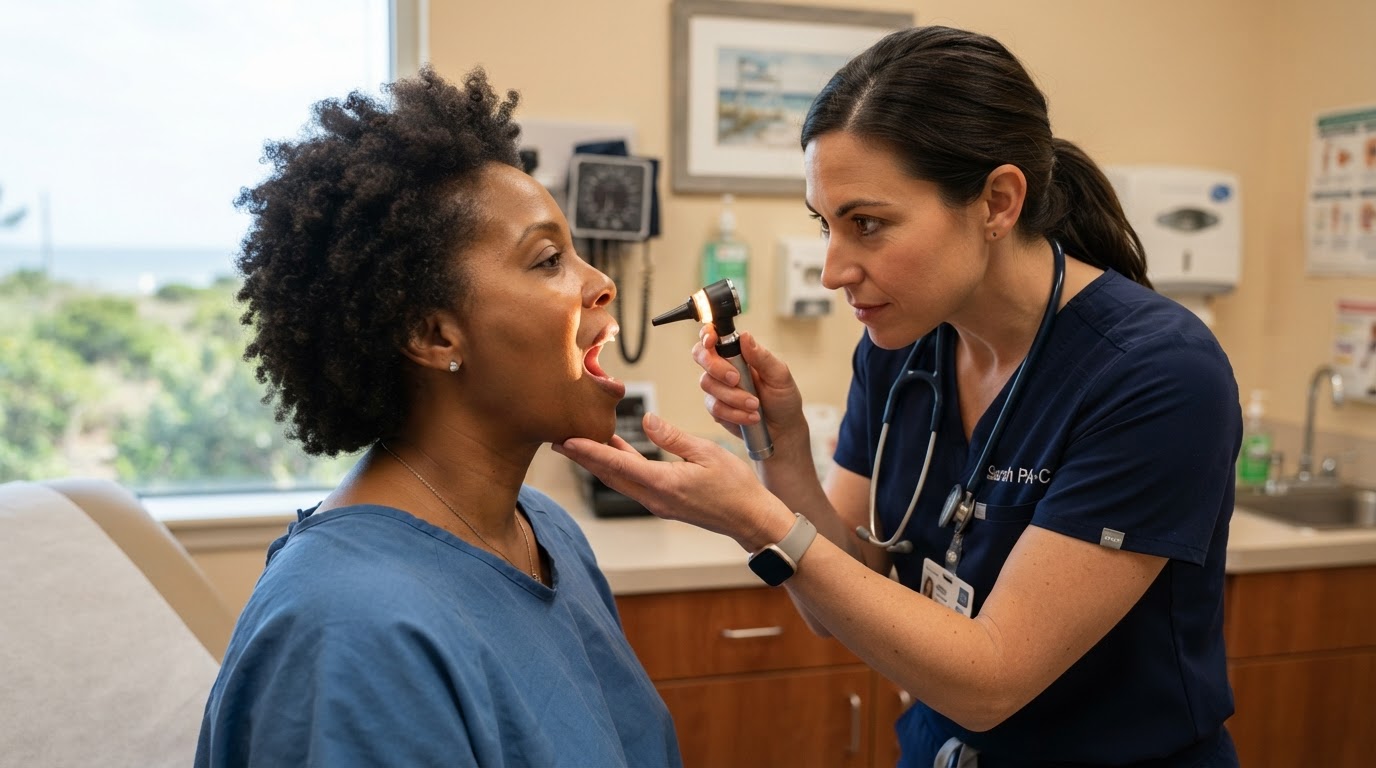
When you come in for a respiratory concern, the visit begins with check-in and a conversation about your symptoms - when they started, what they feel like, whether you've had a fever, and whether you've been around others who are ill. A clinician will examine you, which may include listening to your lungs, checking your throat and ears, and assessing your overall comfort.
Depending on what they find, they may discuss whether a test is appropriate and available, or whether your symptoms are consistent with a viral illness that supportive care will address. We cannot promise a particular test or result time, and testing depends on clinician assessment and current supplies, so the conversation is guided by what makes sense for your specific situation.
If the clinician determines that supportive care is the right approach, they will explain what that means - rest, fluids, over-the-counter measures as appropriate, and what to watch for. If a medication is warranted, they will discuss it with you, including how to take it and what to expect.
The visit is also a chance to ask questions: how long symptoms typically last, when to return, and what signs should prompt you to seek emergency care. We do not provide medical advice on this website, so the guidance you receive comes from the clinician who evaluates you in person.
Visits for respiratory concerns are usually straightforward, but the value is in the assessment and the personalized explanation of what to expect, which is hard to get from a web search alone.
Coverage
Insurance questions
Please call (252) 222-0204 to verify participation in your specific plan before your visit.
Learn more on our Insurance & Billing page.
Questions
Frequently asked questions
Follow-up
After your visit
After a respiratory visit, follow the clinician's instructions carefully, including any guidance about rest, fluids, and medications. Most respiratory illnesses improve over time, but some coughs can linger for weeks after the illness itself has resolved; the clinician can help you understand what to expect.
"If you were advised to return if symptoms don't improve within a certain timeframe, note that and call or come back as directed. Watch for signs that warrant emergency care, including significant difficulty breathing, chest pain, confusion, or a fever that returns after improving - for any of these, call 911."
If you have an underlying condition such as asthma or a chronic lung issue, respiratory illness can affect you differently, so mention this during your visit and follow any specific guidance the clinician gives. We do not offer a patient portal, so if you have questions about your visit, your results, or how you're feeling afterward, please call the clinic.
If you were seen for a concern that may benefit from follow-up with your primary-care provider, let them know about the visit so your care stays connected. Avoid spreading illness to others by following common-sense practices - staying home when you feel unwell, covering coughs, and washing hands - and call us if you're unsure whether you or a family member should be seen again.
Visit & contact
Come see us in Morehead City
Walk-in care and same-day appointments for illnesses and injuries, plus primary care and physicals, for infants, adolescents, and adults. Please call to confirm current availability for your visit.
Carolinas Urgent & Primary Care
Morehead City, NC
Our Clinic Location
4370 Arendell Street
Morehead City, NC 28557
Single clinic location in Morehead City
Walk-in & Appointment Hours
- Monday – Friday:8:00 am – 6:00 pm
- Saturday:8:00 am – 4:00 pm
- Sunday:1:00 pm – 6:00 pm
Last patient will be checked in 30 minutes prior to closing.
Explore
Related care
For a life-threatening emergency, call 911. This website does not provide medical advice.