Urgent Care
Rapid Testing
Rapid testing is among the services at our Morehead City clinic. The right test for your visit depends on a clinician's assessment of what you're experiencing. Please call (252) 222-0204 to confirm which rapid tests are currently available for your visit.
Scope & availability
What this visit covers
This category covers rapid testing as part of a clinician's evaluation. It is not emergency care. For a life-threatening emergency, call 911.
What this category means
Rapid testing means a clinician may use a quick test as part of your visit to help assess what's going on. Whether a test is appropriate depends on the clinician's assessment of your symptoms and what is currently available. Walk-ins are welcome, and same-day appointments may be available.
What it does not promise
Offering rapid testing does not confirm a specific test, brand, result time, price, or coverage under your insurance. Which rapid tests are available can change, so please call to confirm before your visit.
In depth
Understanding this concern
Rapid testing is among the services at our Morehead City clinic, and it is one of the tools a clinician may use as part of evaluating what you're experiencing. A rapid test is a quick test that can help a clinician assess a concern during your visit, rather than sending a sample out and waiting for results.
Key Clinical Focus
The reason rapid testing is valuable is that it can inform the conversation about what may be going on and what next steps make sense, all within the same visit. At the same time, a rapid test is not a standalone service you request on its own; it is part of a clinician's assessment, and whether a test is appropriate depends on what you're experiencing, what the clinician finds on examination, and what is currently available.
We do not list specific tests, brands, result times, prices, or coverage, because what is available can change and what is appropriate depends on your situation. The common thread is that rapid testing supports a clinician's evaluation of illnesses and injuries where a quick result may help guide next steps, whether that is respiratory illness, a sore throat, or another concern where testing is part of making sense of your symptoms.
The clinician who sees you will discuss whether a test is warranted, what it involves, and what the result may mean for your care. We do not promise a particular test, result, or outcome in advance; every decision follows a clinician's assessment of what you're experiencing at the time of your visit.
For concerns where rapid testing is not available or not appropriate, the clinician will discuss alternatives, which may include sending a sample to a lab, referring you for further evaluation, or managing your care based on the assessment alone. Calling ahead lets you confirm which rapid tests are currently available for your visit, which helps you avoid a wasted trip, especially if you are traveling from another town.
We see infants, adolescents, and adults, so rapid testing as part of a visit is available across ages when a clinician determines it is appropriate.
Good to know
Common concerns
Questions about rapid testing are common, and addressing them helps you understand how it fits into your visit. A frequent concern is what rapid tests are available: we offer rapid testing as part of our services, but we do not list specific tests, brands, or result times, because what is available can change and what is appropriate depends on the clinician's assessment of your situation.
Calling ahead to confirm which rapid tests are currently available is the most reliable way to know before you travel. Another common concern is whether you can request a test on its own: rapid testing is typically part of a clinician's evaluation rather than a standalone service, so the decision about whether a test is warranted is made during your visit based on what you're experiencing.
People often ask about result times, and we cannot promise a specific turnaround, as it depends on the test and current availability; the clinician can discuss timing during your visit. A concern that sometimes arises is what a result means, and it's worth understanding that a test is one piece of an assessment, not the whole picture.
A negative test does not always mean nothing is going on, and a positive test may come with guidance about next steps, which is why the clinician discusses results with you in context rather than simply handing you a result. For families, rapid testing as part of a visit is available across ages when a clinician determines it is appropriate, and describing your child's symptoms when you call helps the staff understand what you need.
The value of calling ahead is that you arrive with a sense of whether the test you're hoping for is available, and you avoid a wasted trip, especially if you are traveling from another town along the Crystal Coast.
Safety first
When to seek help
For concerns that might involve rapid testing, knowing when to seek care and what kind is important. Urgent care is appropriate for illnesses and injuries that need prompt attention but are not life-threatening, and rapid testing may be part of that visit when a clinician determines it is appropriate.
You don't need to know in advance whether you need a test; the clinician will decide that during your visit based on your symptoms and what is available. But some symptoms always warrant emergency care, and it's critical to know the difference.
Call 911 or go to an emergency room for chest pain or pressure, difficulty breathing, severe bleeding, signs of a stroke such as face drooping or speech difficulty, severe allergic reactions with swelling of the face or throat, or any concern that feels immediately life-threatening. These are not concerns that rapid testing or an urgent-care visit can safely address, and delaying could be dangerous.
For symptoms that fall in between, calling ahead is the right move: describe what you're experiencing, and we can help you decide whether urgent care is appropriate or whether you should seek emergency care. Some concerns warrant same-day urgent care even if they're not emergencies: a fever that persists, a cough that worsens rather than improves, a sore throat that is severe, or symptoms that are not improving as expected.
For these, calling ahead confirms availability and helps you plan. After a visit that involved rapid testing, the clinician will explain what to watch for and when to return or seek emergency care, and following that guidance is part of using the result to care for yourself safely.
The most important thing is not to delay when a symptom could be serious; when in doubt about whether something is an emergency, treat it as one and call 911.
In context
Understanding this care
Rapid testing is part of how a clinician evaluates certain concerns at our Morehead City clinic, and thinking about it in context helps you understand how it fits into a visit. A rapid test is a tool that can inform a clinician's assessment by providing a quick result during your visit, which can help guide the conversation about what may be going on and what next steps make sense.
"It is not a standalone service you order on its own; it is part of a clinician's evaluation, and whether a test is appropriate depends on your symptoms, the examination, and what is currently available. We do not list specific tests, brands, result times, prices, or coverage, because availability can change and what is appropriate depends on your situation."
The practical first step is to call ahead to confirm which rapid tests are currently available for your visit, which helps you avoid a wasted trip, especially if you are traveling from another town along the Crystal Coast. For a visit that may involve rapid testing, arriving prepared helps: a current medication list, a description of your symptoms and when they started, and your insurance information.
For insurance, some plans handle testing differently from office visits, so asking about coverage when you call helps you understand what to expect. We do not offer a patient portal, so communication about results happens in person or by phone, and calling the clinic is the right way to follow up with questions.
One thing worth knowing is that a rapid test is one piece of an assessment rather than the whole picture; the clinician considers your symptoms, the examination, and the result together, and a negative test does not always mean nothing is going on while a positive test may come with guidance about next steps. For families, rapid testing as part of a visit is available across ages when a clinician determines it is appropriate, and describing your child's symptoms when you call helps the staff understand what you need.
The broader context is that rapid testing supports a clinician's assessment rather than replacing it, and the value of the visit is the evaluation that determines whether a test is appropriate and what the result means for your care. For any acute concern that arises between visits, urgent care may be appropriate for illnesses and injuries, while anything that feels severe or immediately concerning warrants a call to 911.
Because what is available can change, the single most reliable step before you travel is the call ahead: confirming which rapid tests are currently available, whether a test is appropriate for your concern, and what to bring, so your visit is productive. Calling (252) 222-0204 to confirm these details is the right first step for any visit that may involve rapid testing.
Before you come
What to confirm by phone
Please call (252) 222-0204 before your visit. A quick call helps us confirm availability and the right services for your concern.
- Which rapid tests are currently available for your visit
- Whether a test is appropriate for your specific concern
- What to bring, including ID, insurance information, and medication details
- Whether your insurance plan covers the test
Be ready
Prepare for your visit
A little preparation helps your visit go smoothly.
- Bring a photo ID and your insurance card
- List current medications and any allergies
- Note when your symptoms started and how they have changed
- Track any fever or other measurable symptoms
- Mention any exposures or recent contacts, if relevant
What to expect
During your visit
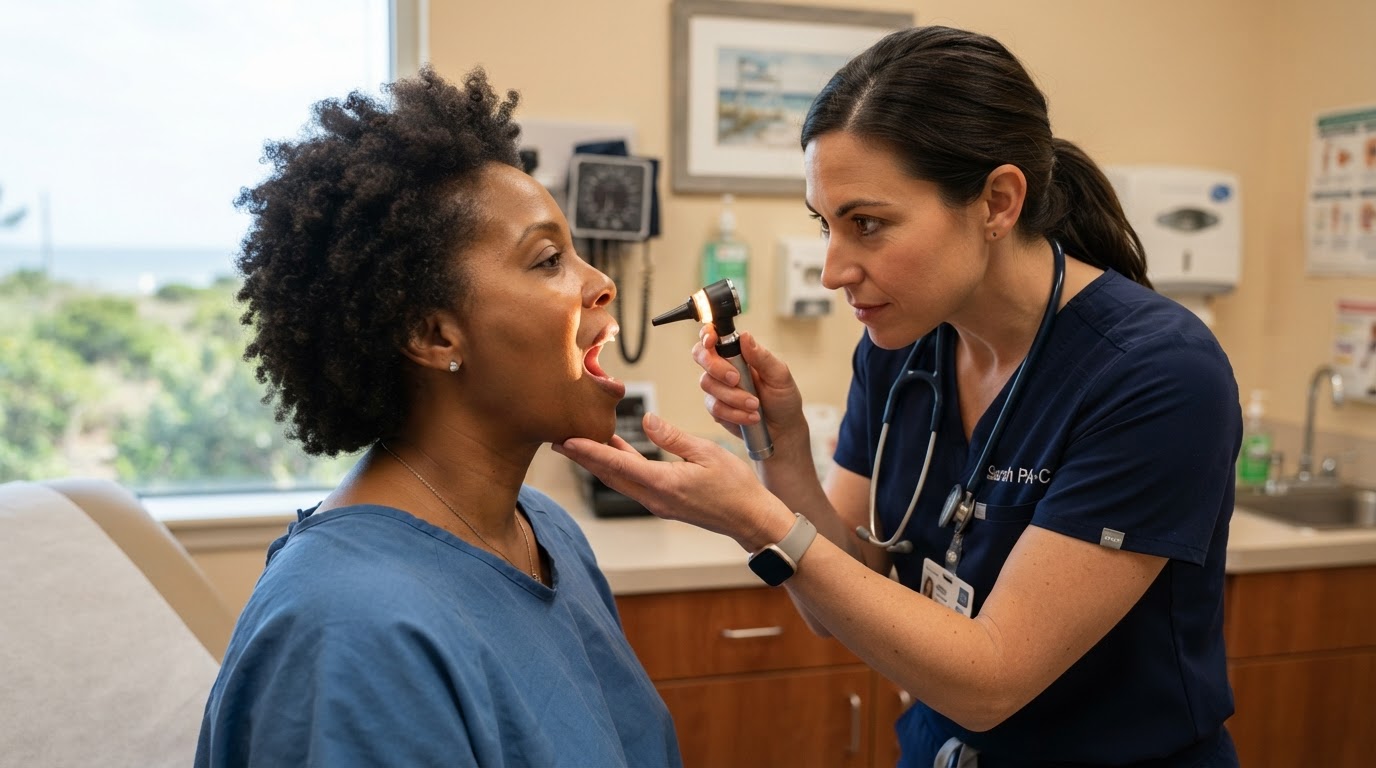
When you come in for a visit that may involve rapid testing, it begins the same way any urgent-care visit does: check-in at the front desk, where staff will ask for your photo ID and insurance card if you have one, and gather basic information about your concern. A clinician will then meet with you to listen to what brought you in, ask follow-up questions, and perform an examination focused on your concern.
Based on what they find, they will discuss whether a rapid test is appropriate and available. We cannot promise a specific test or result time in advance, and testing depends on the clinician's assessment and current supplies, so the conversation about what makes sense for your situation is central to the visit.
If a rapid test is appropriate, the clinician or a staff member will explain what it involves, and the test is typically performed during your visit. The clinician will then discuss the result with you in the context of your overall assessment, including what it may mean for next steps, whether any treatment is warranted, and what to watch for going forward.
If a rapid test is not available or not appropriate, the clinician will discuss why and what alternatives make sense. The visit is also a chance to ask questions about what a result means, how long it takes, and what to do based on the outcome.
Because we do not provide medical advice on this website, the guidance you receive comes from the clinician who evaluates you in person. After the clinical portion of your visit, you'll check out with the front desk, where you can ask about billing, follow-up, and any paperwork you may need.
Coverage
Insurance questions
Please call (252) 222-0204 to verify participation in your specific plan before your visit. Some tests may involve separate charges.
Learn more on our Insurance & Billing page.
Questions
Frequently asked questions
Follow-up
After your visit
After a visit that involved rapid testing, the most important thing is understanding what your result means and what to do next. Before you leave, the clinician will explain what the result shows in the context of your overall assessment, including any next steps such as taking a medication as directed, returning for a follow-up, or watching for specific signs.
"We do not offer a patient portal, so if you have questions about your result or how you're feeling afterward, please call the clinic. If the clinician recommends follow-up, note what was discussed and call to schedule as needed."
If a test was negative but your symptoms persist or worsen, calling the clinic is the right next step, because a single test is one piece of the assessment rather than the whole picture. For certain concerns, the clinician may discuss whether a confirmatory test or a different type of evaluation is appropriate, and that conversation is part of the visit.
If you were seen for a contagious illness, follow any guidance about preventing spread to others, such as staying home while you feel unwell and washing your hands often. If you have an ongoing condition or a primary-care provider elsewhere, letting them know about your visit helps your records stay connected.
Watch for signs that warrant emergency care, such as difficulty breathing, chest pain, or a severe allergic reaction, and for any of these, call 911 right away rather than waiting. Rapid testing is a tool that supports a clinician's assessment, and the guidance you receive after the visit is what helps you use that information to care for yourself safely.
Visit & contact
Come see us in Morehead City
Walk-in care and same-day appointments for illnesses and injuries, plus primary care and physicals, for infants, adolescents, and adults. Please call to confirm current availability for your visit.
Carolinas Urgent & Primary Care
Morehead City, NC
Our Clinic Location
4370 Arendell Street
Morehead City, NC 28557
Single clinic location in Morehead City
Walk-in & Appointment Hours
- Monday – Friday:8:00 am – 6:00 pm
- Saturday:8:00 am – 4:00 pm
- Sunday:1:00 pm – 6:00 pm
Last patient will be checked in 30 minutes prior to closing.
Explore
Related care
For a life-threatening emergency, call 911. This website does not provide medical advice.