
Urgent Care
Injuries & Wound Care
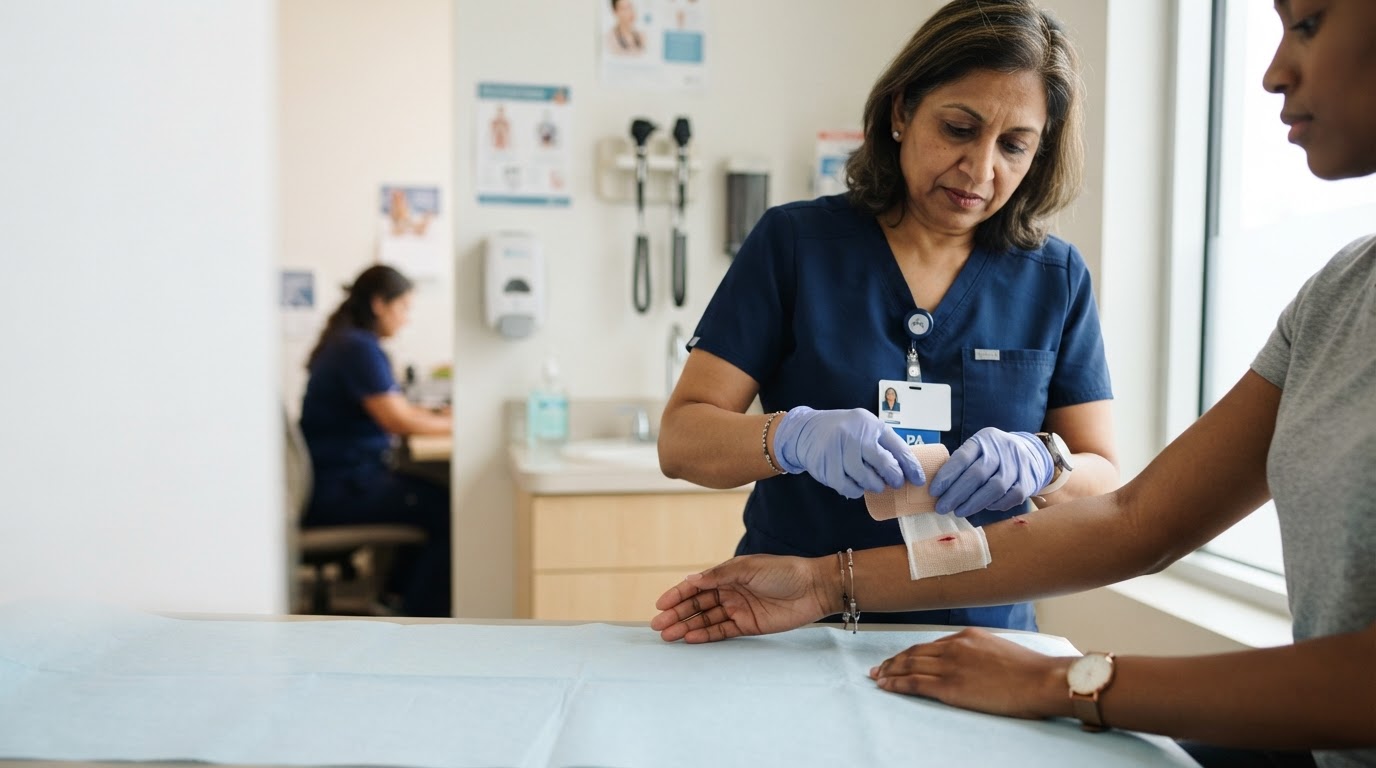
We provide walk-in care for lacerations (including sutures), cuts and burns, fracture care, insect or animal bites, and wound care at our Morehead City clinic. A clinician will assess your injury and discuss appropriate next steps. Please call (252) 222-0204 to confirm which services are currently available for your visit.

Scope & availability
What this visit covers
This category covers injuries and wound care, including lacerations and sutures, cuts and burns, and fracture care. It is not emergency care. For a life-threatening emergency, call 911.
What this category means
Injury and wound care means a clinician evaluates lacerations, cuts, burns, bites, and possible fractures and discusses the right next steps, which may include sutures, wound care, or imaging. Walk-ins are welcome.
What it does not promise
An injury visit does not guarantee a particular procedure, a specific result time, or coverage under your insurance. Please call to confirm current availability of imaging and timing for your visit.
In depth
Understanding this concern
Injuries happen in the yard, at work, in the kitchen, on the water, and many warrant prompt evaluation even when they are not emergencies. At our Morehead City clinic, we provide walk-in care for lacerations (including sutures), cuts and burns, insect and animal bites, fracture care, and wound care, so a clinician can assess your injury and discuss appropriate next steps.
Key Clinical Focus
Lacerations may need cleaning and, in some cases, sutures to close them, and our clinicians treat lacerations including sutures as part of injuries and wound care. Burns from hot surfaces, steam, or sun vary in severity, and an assessment helps determine the right approach to care and what to watch for as they heal.
Insect and animal bites can cause pain, swelling, and sometimes infection, and a clinician can evaluate whether further steps are appropriate. We also treat fractures, and X-rays are listed among our services, which a clinician may use if an injury suggests a possible broken bone.
What ties these concerns together is that they benefit from in-person assessment: a clinician can examine the injury, consider whether further steps such as a procedure or imaging are appropriate, and explain what to expect as it heals. For deep wounds, uncontrolled bleeding, severe burns, or any life-threatening injury, this is not the right setting; call 911.
Calling ahead lets you confirm whether the specific care you need is available today and what to bring, including your medication list, especially if you take blood thinners, and your last tetanus shot if you know it.
Good to know
Common concerns
Injuries raise a number of common questions, and addressing them helps you decide when a visit makes sense. A frequent concern is whether a cut needs a procedure to close it: cuts may need cleaning and, in some cases, sutures, and we treat lacerations including sutures as part of injuries and wound care; the right approach depends on the depth, location, and nature of the cut.
Another common concern is whether a burn is serious: burns from hot surfaces, steam, or sun vary in severity, and an assessment helps determine the right approach to care; severe burns, burns over a large area, or burns on the face, hands, feet, or genitals warrant emergency care. People often ask about insect and animal bites, and it's worth understanding that bites can cause pain, swelling, and sometimes infection, and a clinician can evaluate whether further steps are appropriate.
A concern that sometimes arises is whether an injury involves a fracture, and we treat fractures, with X-rays listed among our services, which a clinician may use if an injury suggests a possible broken bone; please call to confirm on-site imaging availability and timing. For injuries that involve significant bleeding, deep wounds, or a visible deformity, those warrant emergency care rather than urgent care.
For people who take blood thinners, even cuts can bleed more than expected, so mentioning your medications during your visit is important, and a cut that won't stop bleeding warrants emergency care. For workers, a work-related injury may involve workers'-comp paperwork, so bringing your employer's information helps.
The value of the visit is that it replaces guesswork with a clinician's assessment of the injury and a clear explanation of the right approach to care and what to expect as it heals.
Safety first
When to seek help
For injuries, knowing when to seek care - and what kind - is important, because some injuries warrant emergency care. Urgent care is appropriate for lacerations, cuts and burns, insect and animal bites, fractures, and injuries that are not life-threatening and do not involve significant bleeding or visible deformity.
You don't need to wait until an injury is severe to be seen - in fact, addressing a wound promptly helps prevent infection. But some injuries always warrant emergency care, and it's critical to know the difference.
Call 911 or go to an emergency room for uncontrolled bleeding that won't stop with pressure, deep or large wounds, severe burns or burns over a large area, burns on the face, hands, feet, or genitals, major injuries such as broken bones with visible deformity, injuries with numbness or inability to move a limb, head injuries with confusion or loss of consciousness, or any concern that feels immediately life-threatening. These are not concerns that urgent care can safely address.
For symptoms that fall in between, calling ahead is the right move: describe the injury, and we can help you decide whether urgent care is appropriate or whether you should seek emergency care. Some injuries warrant same-day urgent care even if they're not emergencies: a cut that may need sutures, a burn, a bite with swelling, or an injury with pain and swelling that suggests a possible sprain or strain.
For these, calling ahead confirms availability and what to bring, including your medication list and your last tetanus shot if you know it. After a visit, the clinician will explain what to watch for - including signs of infection such as increasing pain, spreading redness, warmth, swelling, pus, or fever - and when to return or seek emergency care.
The most important thing is not to delay when bleeding is severe or a major injury is involved - when in doubt about whether an injury is an emergency, treat it as one and call 911.
In context
Understanding this care
Injuries and wounds are a broad category that covers the kinds of concerns that come with an active life - cuts from kitchen knives or yard tools, burns from cooking or hot surfaces, insect and animal bites, scrapes, lacerations, and fractures. The value of an in-person assessment is that a clinician can examine the wound, assess its depth and cleanliness, and discuss what next steps make sense, which may include cleaning, dressing, sutures for lacerations, or fracture care.
"We treat lacerations (including sutures), cuts and burns, bites, fracture care, and wound care; please call to confirm on-site imaging availability and timing. What you can do practically before a visit is apply gentle pressure to a bleeding wound with a clean cloth, rinse a wound with clean water, and avoid applying substances that aren't meant for wounds."
For burns, cool water - not ice - is the general first step, but follow the clinician's guidance for your specific situation. For families, injuries are common in children and in adults who work with their hands, and a wound that is deeper than a scratch, that won't stop bleeding with gentle pressure, or that shows signs of infection warrants assessment.
Calling ahead lets you describe the injury and confirm availability. Some injuries warrant emergency care rather than urgent care - severe bleeding that won't stop, deep or large wounds, wounds with embedded objects, major injuries such as broken bones with visible deformity, or severe burns - and the clinician's assessment includes checking for signs that need a higher level of care.
The broader context is that most injuries heal well with appropriate care, but because wounds vary so much, an assessment helps you understand what your specific injury needs and what to watch for as it heals.
Before you come
What to confirm by phone
Please call (252) 222-0204 before your visit. A quick call helps us confirm availability and the right services for your concern.
- Whether the specific care you need is available today
- Whether imaging is available, if relevant
- What to bring, including medication and allergy lists
- Whether your insurance plan is accepted


Be ready
Prepare for your visit
A little preparation helps your visit go smoothly. Please call ahead to confirm availability and what to bring.
- Note how and when the injury happened
- Describe any bleeding, pain, or swelling
- List current medications, especially blood thinners, and allergies
- Note your last tetanus shot if you know it
- Bring your insurance card and photo ID
What to expect
During your visit
During an injury visit, the clinician will ask how and when the injury happened, what your symptoms are (pain, bleeding, swelling, numbness), and about your medical history, including medications and allergies. They will examine the injury and assess its severity.
Based on what they find, they may discuss whether a procedure such as sutures, imaging, or another step is appropriate and available, or whether cleaning and supportive care are the right approach. If a laceration needs sutures, the clinician will discuss it with you before proceeding, including what to expect and any follow-up you may need.
If imaging is warranted for a possible fracture, they will discuss it and how results are handled; please call to confirm on-site imaging availability and timing. The visit is also a chance to ask about how the injury is likely to heal, what to watch for, and when to return.
Because we do not provide medical advice on this website, the guidance you receive comes from the clinician who evaluates you in person, which is especially important for injuries, where the right approach depends on what the clinician sees and finds.
Coverage
Insurance questions
Please call (252) 222-0204 to verify participation in your specific plan before your visit.
Learn more on our Insurance & Billing page.
Questions
Frequently asked questions
Follow-up
After your visit
After an injury visit, follow the clinician's instructions carefully, including any guidance about keeping a wound clean and dry, changing dressings, using medications as directed, and watching for signs of infection. Most wounds heal over one to two weeks, though the timeline depends on the injury; the clinician can help you understand what to expect.
"Watch for signs that warrant a return visit or emergency care, including increasing pain, spreading redness, warmth, swelling, pus, fever, or red streaks from the wound; for any of these, call the clinic or seek care. If you were advised to return for a follow-up, such as to check healing or remove sutures, note that and come back as directed."
If you were given a medication, take it exactly as directed. For burns, keep the area protected from further injury and sun exposure as it heals.
If you have a condition that affects healing, such as diabetes, mention this during your visit and follow any specific guidance. We do not offer a patient portal, so if you have questions about your injury, your results, or how it's healing, please call the clinic.
If you were seen for a work-related injury, keep any documentation and ask about follow-up and billing.
Visit & contact
Come see us in Morehead City
Walk-in care and same-day appointments for illnesses and injuries, plus primary care and physicals, for infants, adolescents, and adults. Please call to confirm current availability for your visit.
Carolinas Urgent & Primary Care
Morehead City, NC
Our Clinic Location
4370 Arendell Street
Morehead City, NC 28557
Single clinic location in Morehead City
Walk-in & Appointment Hours
- Monday – Friday:8:00 am – 6:00 pm
- Saturday:8:00 am – 4:00 pm
- Sunday:1:00 pm – 6:00 pm
Last patient will be checked in 30 minutes prior to closing.
Explore
Related care
For a life-threatening emergency, call 911. This website does not provide medical advice.